

Mauve 👁💜 @mauve@mastodon.mauve.moe
- Pronouns
- they/them/it
- mauve+fedi@mauve.moe
- Matrix
- @mauve:mauve.moe
- Github/Gitlab/Discord
- @RangerMauve
Mod
Occult cyberpunk. Yap with me about decentralized systems, wearable computing, and biohacking.
Joined Apr 2022
In a world of renting and subscription services it feels decadent to own something.
Maybe I should get a second one handed keyboard to double my output speed 🧠🧠🧠
Born to faff about, forced to lock in.
Fuck websites that refuse to show content without JS enabled and the latest chrome browser. There's no reason that static text content needs all that BS except lazyness and apathy.
Mauve 👁💜
boosted

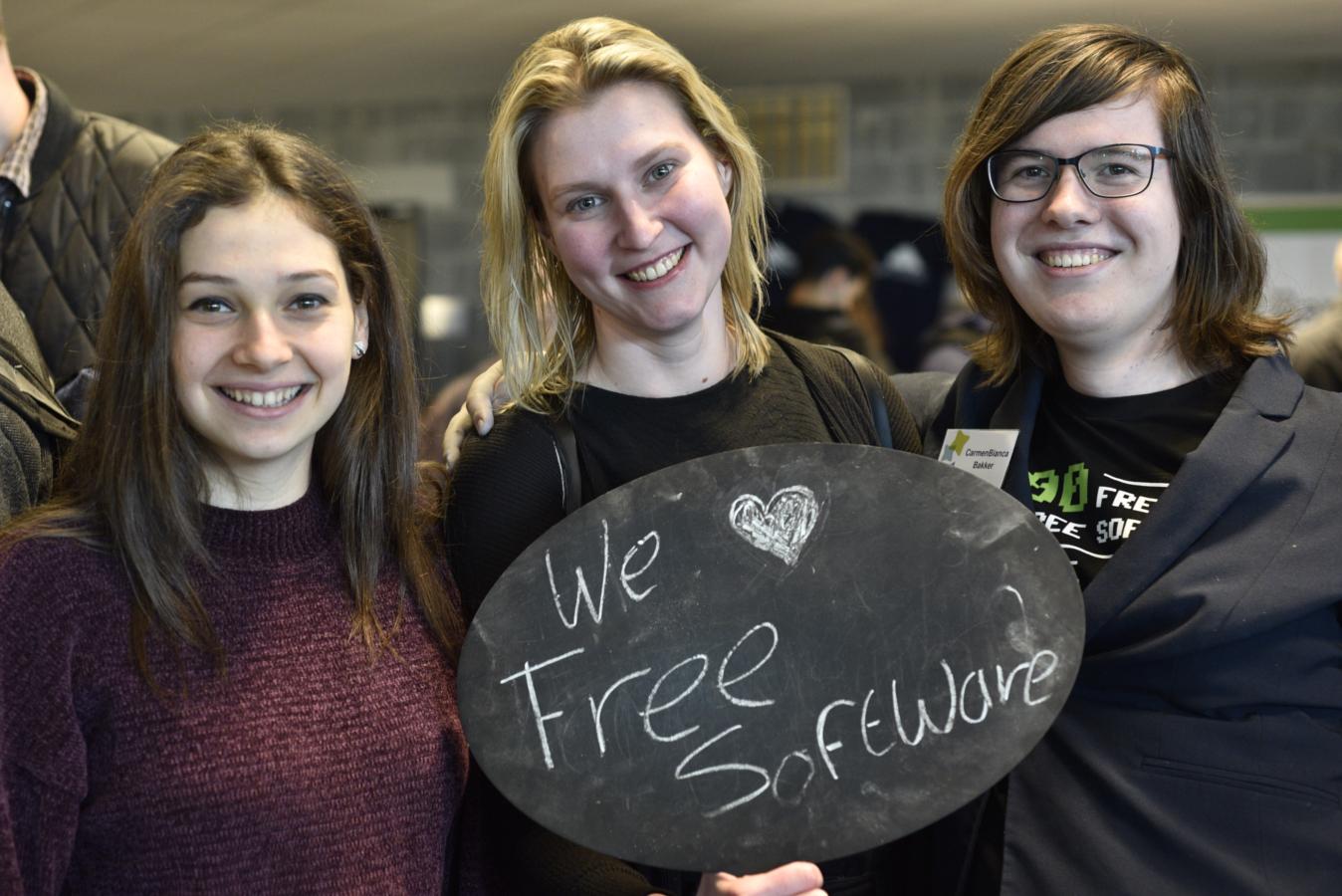
This petition wants contributing to Free Software to be legally and officially recognized as volunteering in Germany on the same level as youth work or ambulance service:
This would bring fiscal and funding advantages for FLOSS organizations and the volunteers themselves.
If you are a German citizen, please sign the petition and let's get our volunteers the recognition they deserve!
---
Photo credit: FSFE.
Getting my partners in on this morning jumping jacks trend >:)
The system shock remaster is fun kn the ps5
Neat, Electron apps only provide their full tree to the accessibility API if they detect that a process called `orca` is running. This means they don't work with any other screen readers without setting extra command line flags.
Mauve 👁💜
boosted

There have been exactly two innovations in web browsers in the last 16 years:
1. "Show Reader Automatically" in 2010;
2. "Hide Distracting Items" in 2024.
Everything else has either been a waste of goddamned time, or actively malicious. Mostly the latter.
Mauve 👁💜
boosted

If you think of universal basic income as just "more money," you aren't understanding it and what makes it so different and effective. The fact it comes at a regular frequency is a key factor. When you know that whatever happens next month, you can still buy food, that's a huge deal.
It's STABILITY
The pain of not knowing why the heck this data doesn't seem to be replicating. 😭 We've exchanged bitfields so it's presumably supposed to be replicating, but somehow there's one block missing. The system doesn't break but it adds weird latency to our setup.
Mauve 👁💜
boosted

i will say, the most alarming thing i’ve come across in the AI space is this:
i’ve spoken with various, quite large, financial institutions about their plans to integrate AI into member account management self service workflows. check my balance, make a transfer, that kinda stuff.
the area i always drill in on is “how is the AI tooling able to authenticate the customer?”
the answer is usually something along the lines of “well it has access to information in the member database that it can use to ask questions that verify identity.”
so then i ask, “so lets say it verifies the identity of the customer and connects to your core banking systems - is it connecting as that customer would - or with some sort of super user access, like an employee for example?”
the answer is nearly always: “oh its got a service account that can connect to everything”
so then i say, “well, what stops the customer from using the AI’s privileged access to access information belonging to other customers?”
and then the answer is usually: “well…the AI just knows.”
and then you let them sit with that answer and often times it dawns on them.
Full moon tonight!
Mauve 👁💜
boosted

I'm yet again reminded that accessibility technologies are priced unfairly. Did you know that a pair of hearing aids starts at roughly £500 but an average model can easily cost over £1500? And it's not like it's rocket science.
Similarly, Braille displays start at £1500, but can easily cost over £5000.
Similarly, the most popular and one of the most affordable Braille printers costs almost £3000.
Something can be said about special design requirements for such devices, or about the fact that there is no demand to make them at the scale that would allow to cut the costs ten times. And I can't even say that a high price is an excuse; if you'd try to build a Braille embosser that can operate at practical speeds with decent reliability using off the shelf components, you are likely to spend more money on it than you'd spend getting a commercial solution, even without R&D costs.
So, uh, folks, we can do better. I can't be the only one who keeps thinking about making such technologies cheaper, right?
Maybe I should make my own linux accessibility service. 🤓☝️
Kinda wish I could set the Orca Modifier button to something more convenient for my strange keyboard setups. Middle mouse button would be ideal tbh.
Mauve 👁💜
boosted
And of course on a SiliconGraphics workstation there's also a 3D gopher client: GopherVR


Really not a fan of how many web pages have all their navigation BS at the start of their accessibility tree. The main content should be front and centre rather than sidebars.
Found it from this blog post on using orca headless on a raspberry pi. I want to get rid of screens eventually so it's quite relevant for me.
https://techesoterica.com/future-ready-vision-with-the-voice-and-the-raspberry-pi-4b/
Stumbled across this neat tool for #blind folks to use webcams as a sort of sonar using stereo audio. (warning can be loud)
- Pronouns
- they/them/it
- mauve+fedi@mauve.moe
- Matrix
- @mauve:mauve.moe
- Github/Gitlab/Discord
- @RangerMauve
Mod
Occult cyberpunk. Yap with me about decentralized systems, wearable computing, and biohacking.
Joined Apr 2022